Lithium-ion battery recycling
For laptop, phone, power-bank and portable lithium batteries. The key issue is safe handling before collection, especially for swollen or damaged cells.
Battery recycling requests in Kochi can include UPS, inverter, laptop, phone, power-bank and lithium-ion batteries. Handling depends on chemistry, condition, quantity and location, so share photos and details first; Ewaste Kochi then confirms the safest available pickup route.
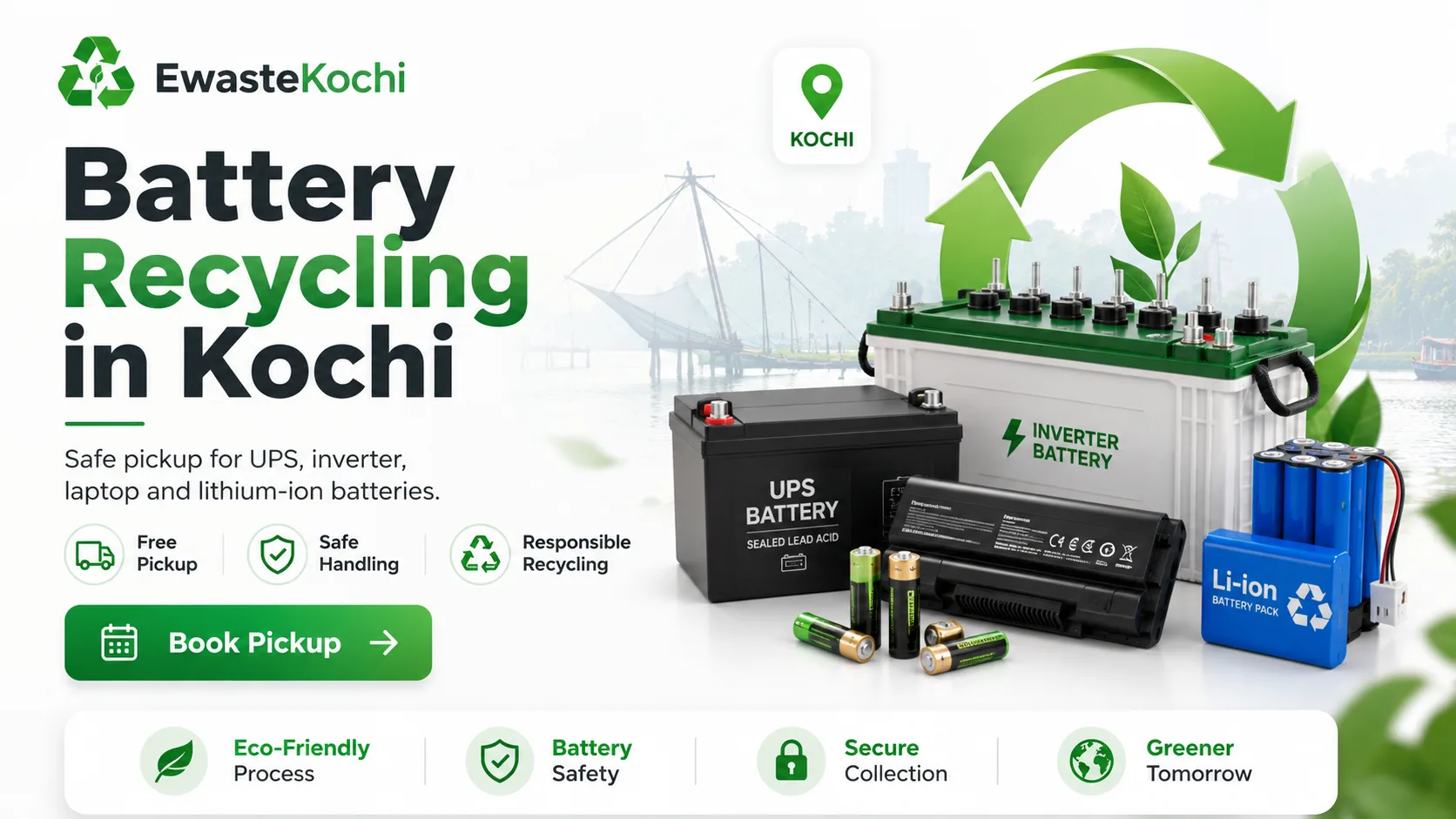
Battery pickup is suitable for UPS, inverter, laptop, mobile and power bank batteries. Mention swollen, leaking, hot or damaged batteries before pickup so safe handling can be planned.
This page covers the main battery recycling intents people search for in Kochi: lithium-ion battery disposal, UPS battery recycling, inverter battery pickup, lead-acid battery handling, damaged battery safety, business battery collection, and condition-based scrap value checks. The right route depends on chemistry, condition, quantity and location, so we confirm feasibility before making pickup or pricing promises.
For laptop, phone, power-bank and portable lithium batteries. The key issue is safe handling before collection, especially for swollen or damaged cells.
For households, offices, apartments and server rooms replacing lead-acid backup batteries. Count, condition and access details help plan pickup.
For larger battery packs where logistics, chemistry and condition matter. These requests need photos and feasibility confirmation first.
For businesses wanting plain-language orientation around Battery Waste Management Rules, producer responsibility and documentation questions.
For users asking whether batteries carry material value. Quotes depend on chemistry, quantity, weight, condition and current market rate.
For urgent questions about swelling, leakage, heat, punctures, storage, fire risk and what not to do before pickup.
A battery is not just "small e-waste." Lead-acid, lithium-ion and mixed household batteries behave differently during storage, transport and recycling. Use the table below to describe your request clearly before pickup.
| Battery type | Common examples | What to flag | Pickup route |
|---|---|---|---|
| Lithium-ion portable batteries | Phones, laptops, tablets, power banks, Bluetooth devices | Flag swelling, heat, punctures, charging failure or visible damage. | Pickup reviewed by item type, quantity and condition. |
| UPS and inverter batteries | Home inverter batteries, office UPS banks, small server-room backup units | Keep upright where possible and mention acid leaks, cracks or bulging. | Common lead-acid collection request; bulk jobs can be scheduled. |
| Mixed household batteries | Remote batteries, toys, small appliances, chargers with embedded cells | Keep loose cells together in a dry container; do not mix with wet waste. | Can usually be combined with an electronics pickup. |
| E-bike, scooter and EV packs | E-bike packs, scooter modules, larger lithium packs | Do not open the pack. Share photos, label details, vehicle type and condition. | Case-by-case feasibility review before any pickup promise. |
Lithium-ion batteries are common in phones, laptops, tablets, power banks, smart devices, camera batteries and many rechargeable accessories. They should not be crushed, punctured, opened or thrown into household waste. If a battery is swollen, heating, leaking, giving off smell, or damaged after a fall, mention that before pickup so the team can advise on interim storage and collection feasibility.
For larger packs such as e-bike, scooter or EV battery modules, send photos of the label, approximate size, vehicle type, condition and location. These are reviewed case by case because transport, weight, chemistry and safety requirements can differ from ordinary portable batteries.
UPS and inverter batteries are usually lead-acid units. They are heavy, may contain corrosive electrolyte and should be kept upright where possible. If there are cracks, leaks, unusual smell, white residue, bulging sides or corrosion on terminals, mention that in the first message. Offices replacing UPS banks should share the approximate count, battery rating if known, floor/access details and whether a maintenance window must be followed.
Some batteries may carry material value, but a fixed online battery scrap price is risky because chemistry, weight, market rate, physical condition and quantity all matter. A WhatsApp estimate is only a starting point; the confirmed value is set after the item details are reviewed and, where needed, inspected.
India has a separate battery waste regulatory framework alongside e-waste rules. Businesses, producers, refurbishers and recyclers may have obligations that go beyond a normal household pickup. Ewaste Kochi can help businesses plan collection details and documentation questions, but this page is general guidance, not legal advice. For formal obligations, check official CPCB resources or speak with a qualified compliance advisor.
Offices, apartments, schools, clinics, shops, maintenance teams and IT rooms often generate batteries in batches rather than one at a time. For bulk UPS-room replacements or recurring maintenance waste, send a clear item list before booking so collection, access and documentation expectations can be aligned.
If the batteries are part of a larger office equipment disposal, the better route may be ITAD or data destruction alongside battery collection.
Responsible battery recycling reduces unsafe disposal, keeps hazardous materials out of ordinary waste streams and supports recovery of useful materials where recycling routes allow. For households, the most useful action is simple: do not keep old batteries indefinitely, do not put them in the regular bin, and describe the condition clearly before collection. For businesses, a documented battery collection process also supports cleaner internal ESG and facility-management records.
Battery pickup enquiries commonly come from Kakkanad, Edappally, Aluva, Vyttila, Thrippunithura, Kalamassery and nearby Kochi locations. Wider Ernakulam requests should be treated as feasibility checks. See the full locations directory, or message us your address.
Official CPCB rules page for battery waste management resources and amendments.
Official portal for producer, recycler and refurbisher workflows under battery waste EPR.
മലയാളത്തിൽ സഹായം വേണോ? ഞങ്ങളെ +91 75005 55454 എന്ന നമ്പറിൽ വിളിക്കുകയോ വാട്സ്ആപ്പ് ചെയ്യുകയോ ചെയ്യാം.
Ewaste Kochi reviews battery pickup requests from Kochi homes and offices. Share the battery type, quantity, condition, photos and location so feasibility can be confirmed.
UPS and inverter batteries, laptop and phone batteries, and most sealed lead-acid or lithium-ion batteries from household or office electronics.
Keep it away from heat, don't puncture or charge it, and store it in a well-ventilated spot. Let us know it's damaged when you message us so we can advise on safe interim storage.
Yes, batteries can be handed over in the same visit as general electronics — they're simply processed through a separate recycling stream afterward.
Offices replacing UPS battery banks can request bulk collection review, and scheduling can be discussed around a maintenance or replacement window.
Batteries are sorted by chemistry and routed separately from general electronics. Documentation support may be available depending on the service type and agreed handling process.
Lithium-ion cells from phones, laptops and power banks can be reviewed alongside lead-acid UPS and inverter batteries. They are routed differently because the chemistries carry different risks.
Small battery pickups can be requested, but feasibility is confirmed case by case based on battery type, condition, location and route timing.
Some battery types may carry material value depending on type, quantity, condition and current market rate — mention this when you book and we'll advise, though it's never guaranteed before inspection.
Keep it dry, away from heat and direct sun, and don't stack heavy items on top. Anything visibly damaged should be kept separate from healthy batteries.
Timing depends on your area, battery type, condition, quantity and current route schedule. Message with complete details to confirm the earliest practical slot.
These larger lithium packs have their own handling considerations — message us with details first so feasibility can be confirmed case by case rather than assumed.
Yes, lithium-ion batteries from phones, laptops, power banks and some electronics can be reviewed for pickup. Larger lithium packs such as e-bike or scooter batteries should be checked case by case with photos and specifications.
Yes. UPS and inverter batteries are common lead-acid battery recycling requests. Share the battery count, approximate size, condition and location before pickup is confirmed.
Often, but they must be flagged before pickup. Keep swollen, leaking, hot or punctured batteries separate, away from heat and pressure, and share photos so safe handling can be planned.
Yes. Battery value depends on chemistry, weight, condition, quantity and current material markets. Treat any WhatsApp estimate as preliminary until inspection confirms details.
Lead-acid batteries such as UPS and inverter units are heavy and commonly handled by weight. Lithium batteries need extra attention to fire risk, chemistry and physical damage before collection.
Small EV, e-bike or scooter battery requests are reviewed case by case. Full vehicle battery packs can require specialist logistics, documentation and partner routing, so do not assume pickup before review.
India's Battery Waste Management Rules set a regulatory framework for environmentally sound battery waste management and producer responsibility. This page is practical guidance, not legal advice.
Yes, businesses with regular UPS-room, maintenance or IT refresh battery waste can ask about scheduled or recurring collection. Feasibility depends on volume, location and battery condition.
Documentation support may be discussed for business pickups depending on item type, quantity, agreed handling route and service scope.
Do not courier damaged, swollen, leaking or unidentified batteries without checking applicable transport rules and packaging requirements. For local pickup, tell us the condition before collection.
Keep batteries dry, separate damaged units, avoid heat or pressure, do not dismantle them, and share photos, quantity and location before pickup is confirmed.
Last updated: